Industry
AI Avatars Are Boring Your Audience to Death (And You Can't See It Happening)
AI avatar platforms ship pre-recorded faces on a loop. After thirty seconds your audience checks out, and they don't know why. Here's the structural reason behind the disengagement, and what real-time 3D digital humans do differently.
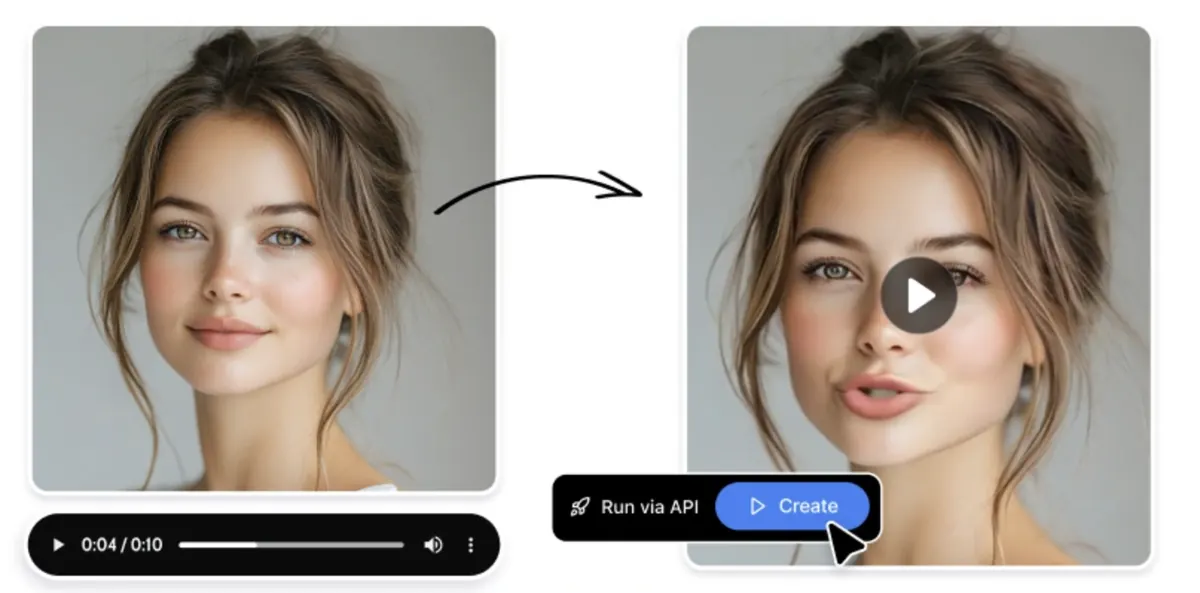
You've seen the demos. A face appears on screen. It talks. It answers questions. The AI sounds sharp, the voice is natural, and for about ten seconds you think: this is the future.
Then something happens that nobody talks about.
You watch it for another minute and the feeling fades. Not because the AI got worse. Not because the voice broke. The face did something it did thirty seconds ago. The same head movement. The same idle loop. The same blinking pattern cycling back around. Your brain clocked it, filed it under "not real," and quietly checked out.
That's the loop problem. And it's killing the experience of almost every AI avatar product on the market today.
What AI avatar tools are actually selling you
Platforms like Anam, HeyGen, D-ID, Tavus, and Synthesia have built impressive technology around a single idea: take a video recording of a face, loop it, and synchronize the mouth to AI-generated audio in real time.
The AI part, the conversational intelligence, the voice, the low latency, is genuinely good. That side of the technology has advanced rapidly.
The face has not.
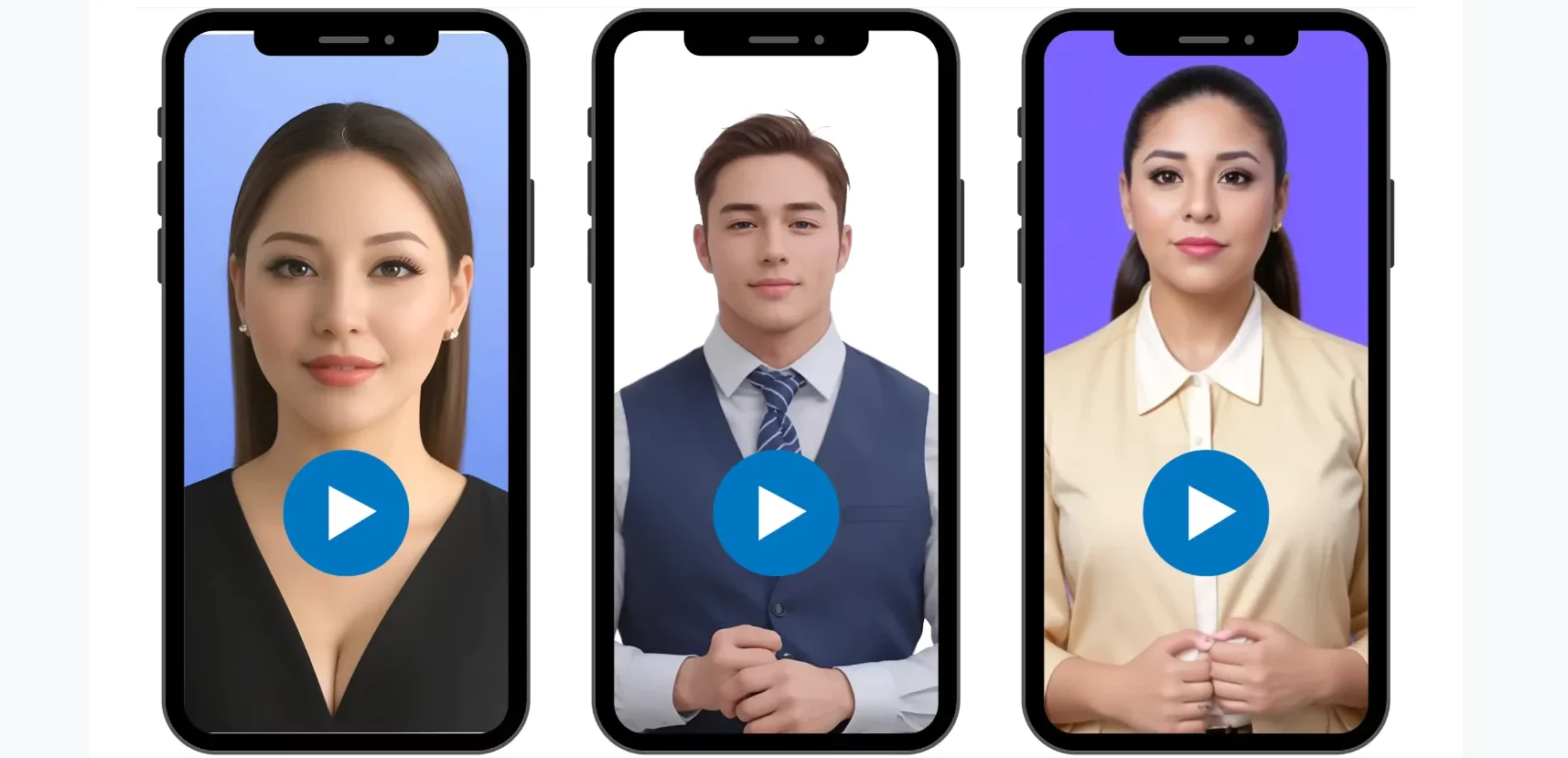
What you're looking at is a pre-recorded video clip running on repeat. The same frames. The same expression.
The same micro-movements, looping every few seconds for as long as the session runs. The lip sync is generated live. Everything else was filmed once and frozen.
This is not a criticism of the engineering. It's a structural limitation of the approach. You cannot add spontaneity to a recording. You cannot make a video clip react to what's happening around it. You cannot make it perform. You can only play it again.
Why your brain knows before you do
Human perception evolved to detect patterns in faces with extraordinary precision. We are wired to notice repetition in the people we're looking at, because in the real world, a face that repeats itself exactly is not a face at all.
The uncanny valley is usually discussed in terms of realism: does it look human enough? But there's a second valley nobody talks about, and it's the one that quietly destroys interactive AI avatar experiences. Call it the behavioral valley. The face looks real. But it behaves like a file on a server, because that's what it is.
After the first loop, your brain has already built a complete model of this face. It knows what's coming. The tilt, the blink, the subtle movement at the shoulder. When those things repeat on schedule, the illusion doesn't just weaken, it actively works against you. Repetition is the signal that something is not alive.
This is why users lose engagement with AI avatar experiences faster than anyone in the industry wants to admit. The conversations can be intelligent. The voice can be warm. But the face is a screensaver, and the brain treats it like one.
What a real-time 3D digital human actually does
A real-time 3D digital human is not a recording. It is a live, fully three-dimensional character that exists and performs in real time, the same way a character in a modern video game or a Hollywood visual effects production comes to life, but interactive and conversational.
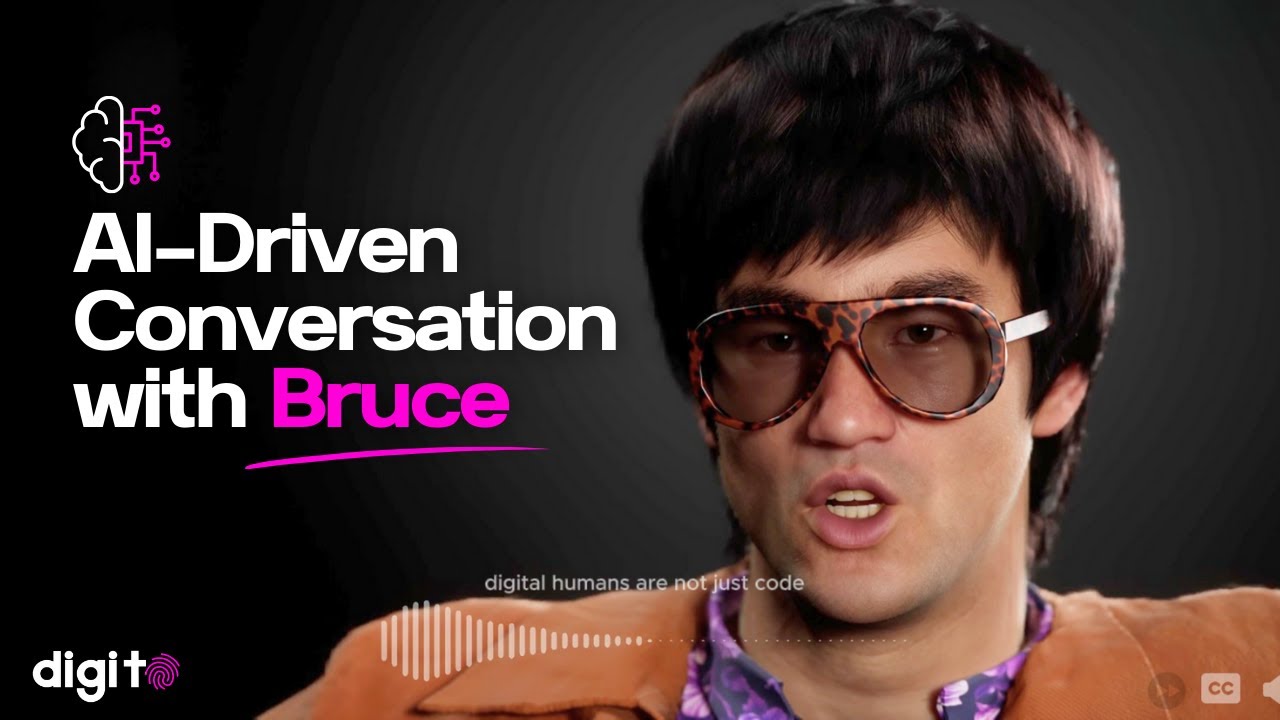
It has a face that actually moves, not replaying a clip, but generating every expression, every glance, every idle breath dynamically in the moment. No two seconds are identical because nothing is pre-recorded. The character reacts, shifts, and performs continuously throughout the interaction.
Place it inside a virtual environment and it belongs there. A luxury boutique. A car showroom. A holographic stage. It doesn't sit in front of a flat background like a video call, it inhabits a space, looks around it, exists within it. That's what makes the difference between something that feels like a widget on a webpage and something that feels like a presence in a room.
It doesn't loop. It performs.
The immersion gap
AI avatar platforms are built for deployment at scale. Customer service. Sales automation. Language tutoring. The experience is designed to be functional, not memorable.
That's a legitimate product category. For a helpdesk bot or a training module, an avatar that loops every thirty seconds is probably acceptable. The user is there for the answer, not the experience.
But the moment your use case requires presence, a luxury brand ambassador, a flagship retail experience, a live event host, a holographic installation, an immersive activation, adequacy becomes a liability. The experience your audience has reflects directly on your brand. A face that loops is a brand that cut corners.
Real-time 3D digital humans exist within environments. They stand inside the world you build around them. They respond to what's happening in the scene, shift their attention, move through space. They are not pasted onto a background, they inhabit one.
That's the difference between an AI avatar and a digital human. One is a window. The other is a presence.
Anam vs Digito: an honest comparison
Anam's technology is well-executed within its category. Their platform offers real-time conversational AI with a video face layered on top, fast response times, support for dozens of languages, and a self-serve interface that can deploy an interactive avatar in minutes. For teams building AI-powered customer service at volume, it's a credible tool.
What Anam cannot offer, not as a product gap but as a consequence of the technology itself, is a face that performs. Their avatars are AI systems with a recorded face playing on top. The intelligence is live. The face is not.
Digito builds differently. Every digital human is a fully realized 3D character, modeled, detailed, and brought to life as a live real-time entity. The face performs. The body moves. The character exists inside an environment built around the experience. The conversational AI connects to something that is actually alive on screen, not looping in the background.
The result is not a better version of the same experience. It's a completely different one.
Who this matters to
If you need to deploy a conversational AI agent to thousands of users next month with minimal budget and maximum speed, the AI avatar platforms exist for you.
If you are a luxury brand, an automotive house, an entertainment studio, a flagship retail space, or any organization where the quality of the experience is inseparable from the perception of the brand, you need a digital human, not an AI avatar.
Your audience will feel the difference before they can explain it. They will spend more time with something that feels alive. They will trust it more. They will remember it. And they will associate that feeling with your brand.
A looped video with dubbed audio is a mask. A real-time 3D digital human is a presence.
The future is not more loops
The AI avatar space is moving fast. Response times are improving. Voices are improving. Conversational intelligence is improving. But every platform building on top of looped video recording is accelerating toward the same ceiling: a face that cannot surprise you, because it has already shown you everything it can do.
Digito starts from a different question entirely: what does it actually take to build something that feels alive?
If your brand needs presence, not just performance, see our work or book a live demo. We'll show you what a digital human looks like when it's actually alive on screen.