Sports & Digital Twins
The Athlete Is the Asset: How NFL Digital Twins Are Changing Sports Advertising Forever.
NFL players are the most recognised faces in American sport. Digital twins mean their likeness can appear in a Super Bowl ad, a fan zone kiosk, and an AR experience simultaneously, without a single day on set.
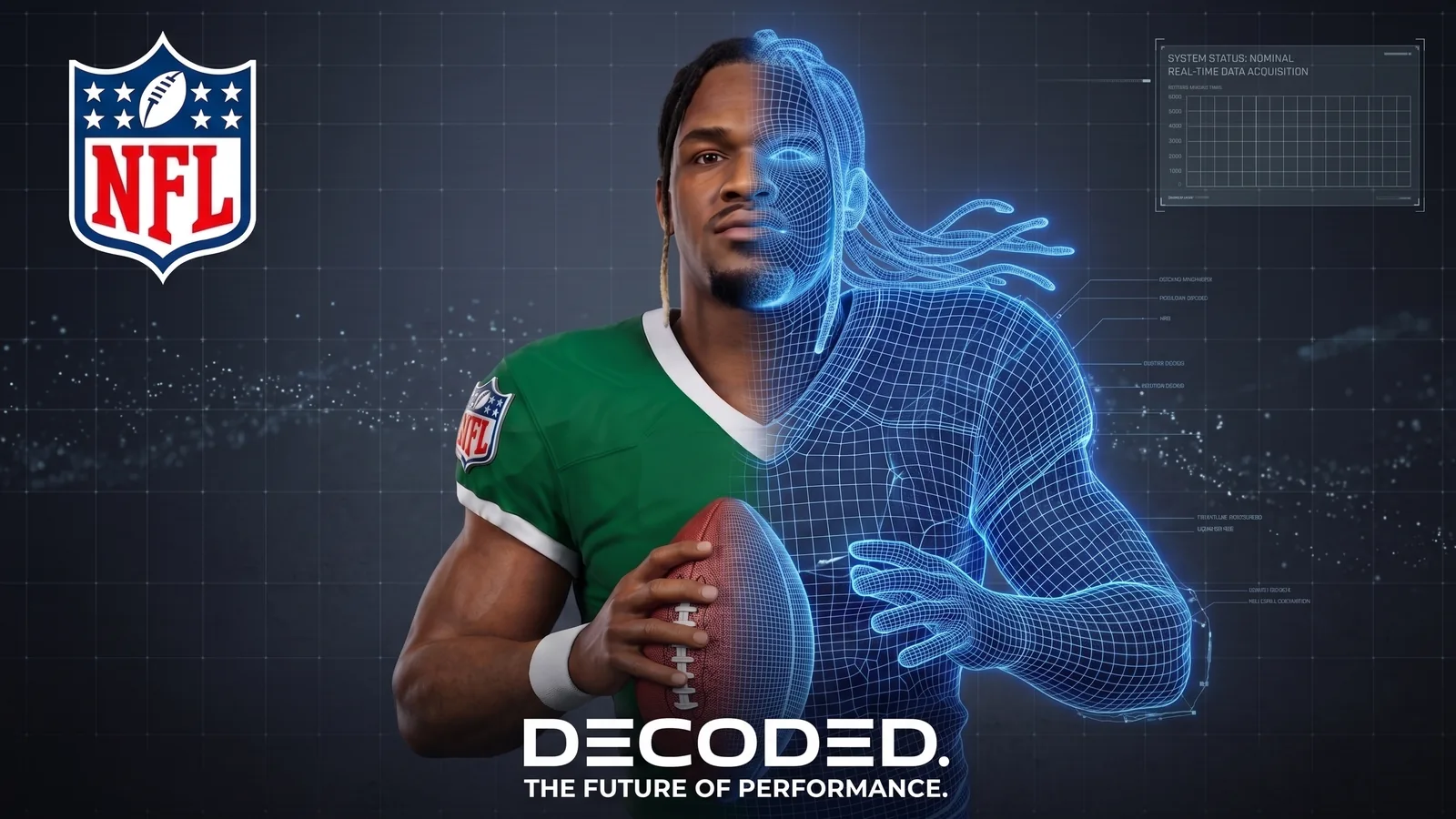
There is a moment at the start of every NFL season when a franchise's marketing team faces the same impossible constraint. They have a roster of world-class athletes. They have a global fanbase hungry for content. And they have approximately zero scheduled hours with the players themselves, who belong to the coaching staff, the medical team, the game plan, and the recovery room from the moment training camp opens to the day the season ends.
That constraint has defined the economics of sports advertising for decades. You can buy a player's likeness rights. You cannot buy their time. And without their time, you cannot produce the content, the campaigns, and the experiences that turn casual viewers into lifelong fans of a brand.
Digital twins change that equation entirely.
What Is an NFL Digital Twin?
A digital twin is a photorealistic, production-grade 3D replica of a real person. Built from reference material, likeness capture, and expert character artistry, a digital twin reproduces an athlete's facial structure, skin detail, hair, body proportions, and movement signature at cinematic quality. The result is indistinguishable from a real shoot, to camera, to the audience at home, and to the brand manager signing off the final cut.
Digito builds digital twins of professional NFL players for advertising campaigns, fan zone activations, and sports marketing programmes. Once a digital twin is built, it becomes a permanent production asset. It can appear in any location, wearing any uniform, performing any motion, in any lighting condition, without scheduling a single hour with the real athlete.
That is not a minor operational improvement. It is a structural shift in what sports advertising can produce, how fast it can produce it, and how far it can scale.
The Problem With Scheduling an NFL Player
To understand why digital twins matter to sports advertising, you have to understand the calendar that controls every decision a professional football player makes from August to January.
Training camp opens in late July. Pre-season games begin in August. The regular season runs from September through January. During that window, a player's time is not theirs to give. Practice sessions, film study, recovery, medical appointments, travel, and team obligations consume every available hour. A player might have a clause in their endorsement contract requiring a two-day shoot window per year. In practice, finding that window between a bye week and a road game, at a time when the player is healthy and available, is a scheduling puzzle that frequently has no solution.
Brands know this. They plan around it by producing everything they need in the off-season, when players are more available. But the off-season ends before the season does. When a player has a breakthrough year, when a moment goes viral, when a team makes a deep playoff run, the brand cannot respond. They are working with footage from eight months ago. The window for relevance has closed.
A digital twin has no off-season. It is available on day one of the season, on Super Bowl Sunday, and on the morning after a player posts a career-best game. The asset is ready when the moment arrives. Talk to us about building a digital twin programme for your roster.
NFL Fan Zones: The Experience Gap
Walk into any NFL stadium on game day and you will find tens of thousands of people who have paid significant money to be there. They arrived hours early. They are in the gear. They are ready to feel close to the team they follow 365 days a year.
And then they stand in a queue for a team photo cutout and a merchandise stand.
The gap between what fans want from a stadium experience and what they actually get is wide, and it has been growing for years as digital expectations have risen. Fans now arrive at games carrying devices that give them access to anything. The bar for what counts as a memorable experience has risen accordingly.
A conversational digital twin of a star quarterback positioned in the fan zone changes what is possible. The player avatar can greet fans by name, break down a play from last week's game, take a simulated photograph, answer questions about the season, and deliver the kind of moment that fans share on social media for days afterward. Not because it is a novelty, but because it is genuinely engaging in a way that a poster or a highlight reel simply cannot match.
The twin runs on a kiosk. It runs in any city the team plays in. It can handle a thousand fan interactions per game day, simultaneously, without anyone from the player's team needing to be in the building.
Every fan gets a one-to-one moment with the player they came to see. Not a poster. Not a cutout. A conversation.
NFL Advertising at Super Bowl Scale
The Super Bowl is the single most expensive advertising event in the world. Brands pay tens of millions of dollars for thirty-second spots. The production budgets for those spots often exceed the media spend. And yet, for the players who appear in those ads, availability is never guaranteed.
An NFL player who reaches the Super Bowl is unavailable in the week before it. Their time belongs entirely to the team. A brand that built its entire campaign around a specific player's physical presence for a Thursday shoot in Los Angeles can find that window closed by a practice schedule change or a minor injury precaution.
Digital twins eliminate that risk. The asset is built well in advance, in controlled conditions, without time pressure. The brand can produce multiple versions of a campaign simultaneously, test different creative directions, and finalise the output without a single day on set with the player. When the campaign needs to change because something happened during the season, the digital twin can be re-rendered overnight.
For advertising agencies managing multi-player campaigns across an NFL season, the operational advantage compounds. Instead of coordinating shoots with six different players across six different schedules, you build the digital twins once and direct the campaign from an edit suite. The players are always available. They are always at their peak. And they will be available for the next campaign, and the one after that, without renegotiating a shoot schedule. If you run a sports advertising programme, this is worth a conversation.
Beyond the NFL: The Athlete Digitalization Playbook
The NFL is the clearest example because of the scale of the commercial ecosystem around it. But the logic applies across every major professional sport.
NBA players face the same scheduling constraints during a season that runs from October to June. Premier League footballers in Europe command global fanbases and endorsement portfolios that their club schedules make nearly impossible to service through traditional shoots. Formula One drivers are the face of billion-dollar brand partnerships and are physically unreachable for large parts of the year.
In each case, the athlete's likeness is a commercial asset of enormous value. And in each case, the traditional method of activating that asset, booking the person, flying them somewhere, putting them in front of a camera, is constrained by a schedule that was never designed around marketing.
Digital twins separate the asset from the constraint. The player's likeness becomes a production asset that the brand controls, the team can licence, and the athlete can approve once rather than scheduling around twelve times a year.
Ready to build an NFL digital twin programme?
Digito builds photorealistic digital twins of professional athletes for advertising, fan zones, and brand campaigns. Let's talk about what that looks like for your roster.
What the Production Process Looks Like
Building a photorealistic digital twin of an NFL player is not a shortcut. It is a production. The output quality is what makes it commercially viable, and that quality requires the same discipline that goes into any cinematic character work.
Digito's process starts with likeness capture: high-resolution reference material of the athlete's face, body, and movement. This can be captured in a single controlled session or built from existing high-quality footage. From there, our team builds a full 3D character with custom skin shading, hair simulation, clothing simulation for the relevant uniform, and a rigged facial system capable of performance-level expression.
The result is a production asset that a visual effects team, an advertising post house, or a game-day activation team can work with directly. It integrates into existing production pipelines. It renders in real time for interactive experiences or offline for broadcast quality. And it is updated over the course of the player's career, not rebuilt from scratch every season.
The first build is the investment. Every campaign after that is an activation of an asset you already own.
The Coming Standard
Sports marketing executives who are thinking about this now are not early adopters chasing novelty. They are positioning ahead of a transition that is already underway.
The production infrastructure for photorealistic digital humans has reached a point where the output quality, the production timelines, and the per-campaign cost structure make this viable at commercial scale. The brands and franchises that build these programmes now will have mature, high-quality digital twin assets when the rest of the industry starts catching up. They will have the workflow, the approvals, and the library of athlete assets in place.
The ones who wait will spend the next three years doing the work the early movers did in the first year, and they will do it in a more competitive, more expensive market, against organisations that already know how to use the tools.
The athlete is the asset. Digital twins make that asset available everywhere, all the time, without the constraints that have always limited what sports advertising can do. See what we have already built, and get in touch if you want to scope what a programme looks like for your team or brand.