Industry
Historical Figures Brought to Life: How Talking Avatars Are Transforming Museum Experiences
Voices of the past, with a face and a presence. Conversational digital humans are giving museums a way to turn passive collections into immersive, talking encounters that visitors remember and share.
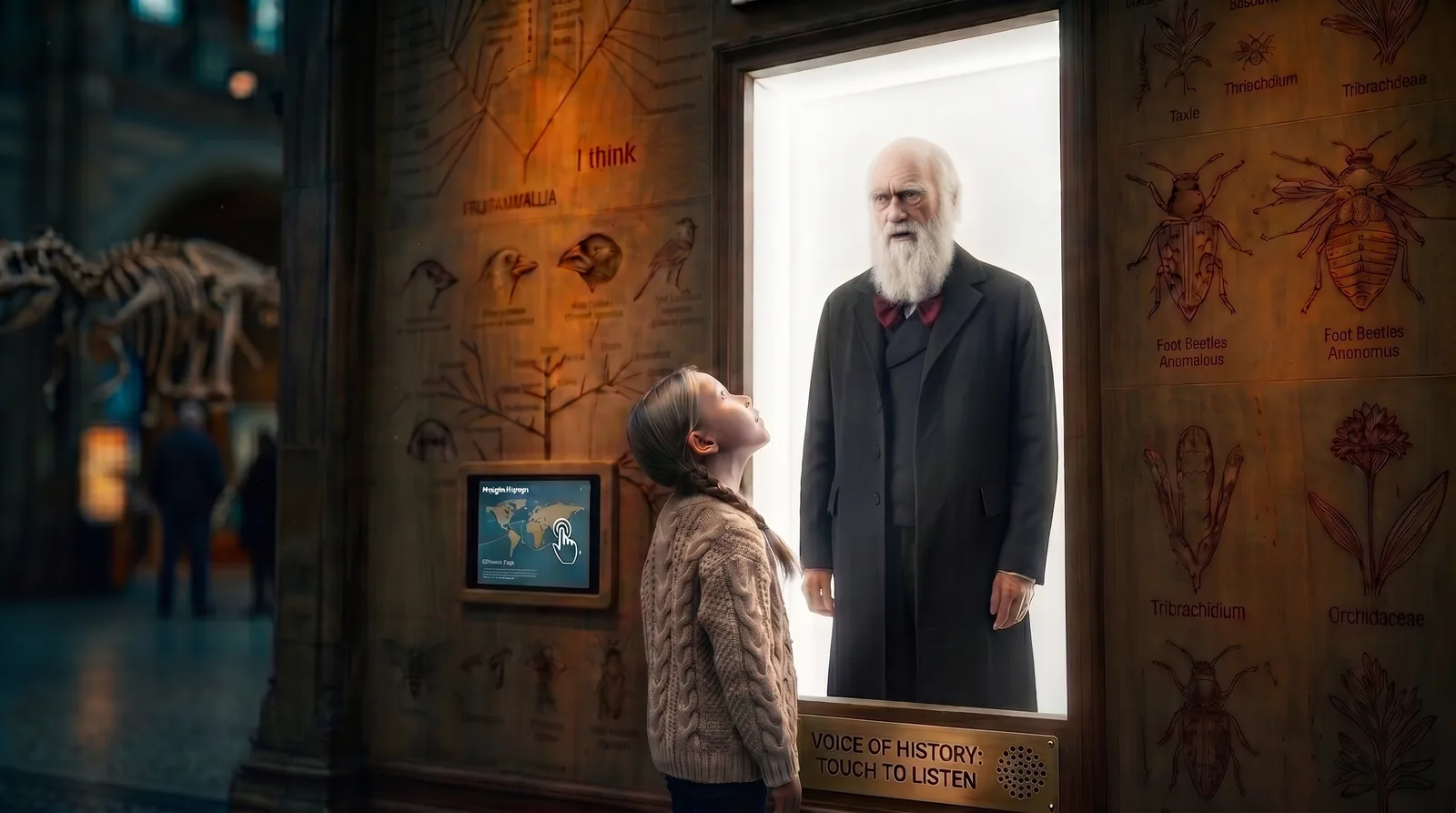
In museums today, every wall, label, and display competes for the visitor's attention. Most lose. Visitors move quickly, read less, and retain very little of what they see. The collection may be extraordinary, but the format is working against it.
The institutions finding a way through this are doing something simple and profoundly effective: they are making the exhibit speak. Not with a looped audio guide. Not with a touchscreen menu. With a face, a voice, and a conversation.
Real-time conversational digital humans, characters that look, sound, and respond like real people, are giving museums a format that visitors have never encountered before. And when something is genuinely new, people pay attention. We can build one for your institution.
Portraits That Speak
The simplest and most powerful application is also the most elegant. Imagine a portrait hanging exactly where you would expect it: framed on a gallery wall, at eye level, lit as a painting would be. But when a visitor steps close, the figure in the portrait begins to speak.
Not a pre-recorded loop. A conversation. The visitor asks about the subject's work, the era, the decisions that shaped a life. The portrait answers in the first person, with knowledge drawn from historical records and curatorial research, in whatever language the visitor speaks.
This is museum technology that fits into the existing architecture of a gallery without disrupting it. No new construction. No dramatic installation. Just a portrait that has something to say. Tell us which figure belongs in your gallery.
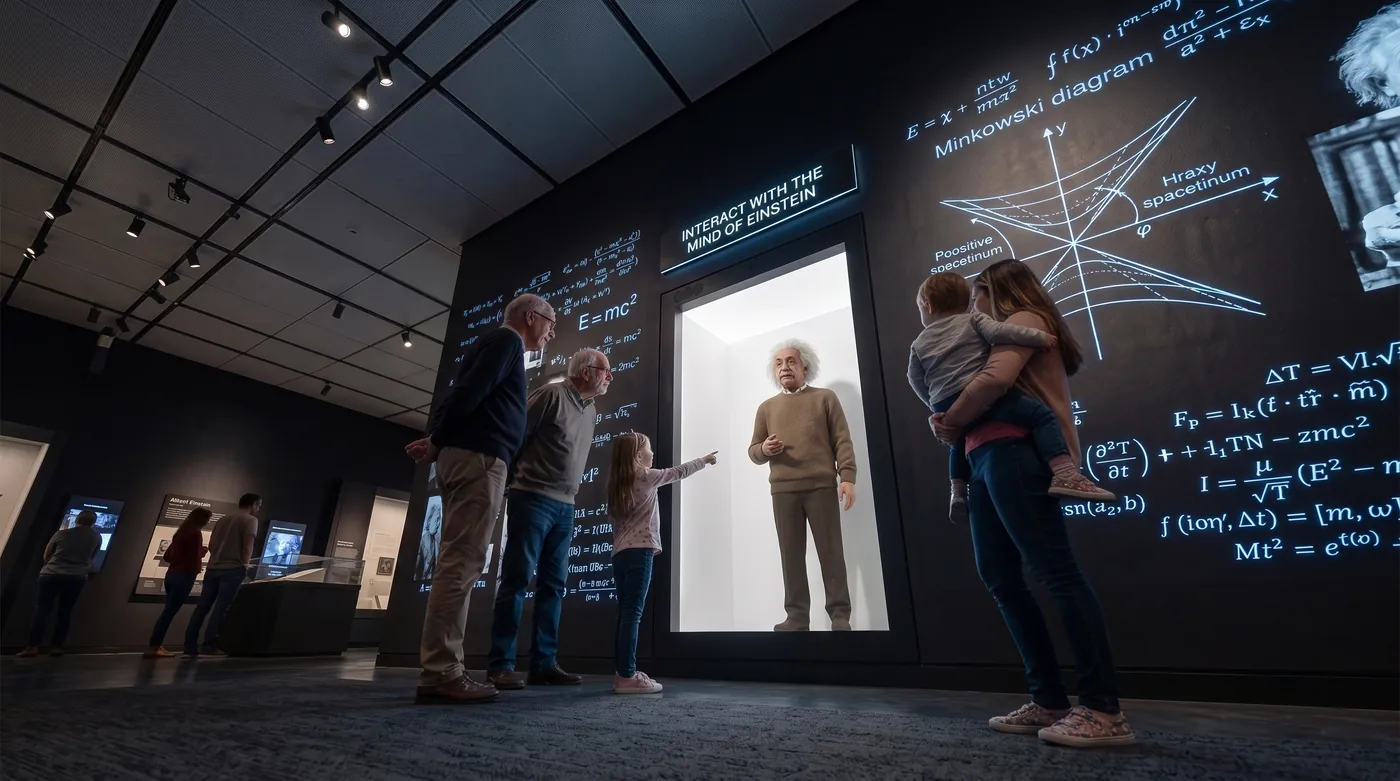
A full-body talking avatar deployed on a large-format screen or kiosk creates a genuine sense of encounter. The figure has scale and presence. It holds eye contact. It responds to what is actually being asked, not a pre-scripted set of options.
Da Vinci explaining the mechanics behind a painting. A medieval queen describing the politics of her court. A scientist walking a school group through a discovery that changed the world. These are not effects. They are immersive museum experiences that change what a visit means. We can work on a custom historical figure for your collection.
What Talking Avatars Add to the Visitor Experience
The impact shows up in four ways that matter to every institution regardless of size or collection type.
Visitor engagement. A character that responds creates a pull that static displays cannot. Visitors stop. They stay. They ask follow-up questions. Groups form naturally around a talking figure in a way they simply do not around a placard.
Shareability. A visitor who has a conversation with Leonardo da Vinci does not keep it to themselves. They film it. They post it. They tell people. The exhibit extends beyond the visit and markets itself through genuine enthusiasm, not advertising spend.
Revenue. Higher engagement translates directly to longer visits, more gift shop traffic, stronger membership conversion, and repeat attendance. A museum that offers an experience people talk about generates the kind of word of mouth that compounds over time.
Language access. A virtual museum guide built on conversational technology speaks to every visitor in their own language, without additional staffing, without scheduling, and without any compromise in quality. International visitors, school groups, and non-native speakers get the same depth of experience as anyone else.
If any of these resonate with where your institution wants to go, let us know and we can map out what this looks like for your space.
The Real Operational Problem Museums Face
Many museums already know they need more interactivity. The obstacle is not vision. It is the mechanics of delivering it consistently.
Staffed interactive experiences require knowledgeable people stationed near exhibits throughout opening hours, in every language visitors might speak. That is an enormous operational cost that most institutions cannot sustain across their full collection.
Volunteer and docent programs fill some of the gap but introduce their own challenges. Most volunteers can commit one day per week. An exhibit that needs consistent coverage across seven days therefore requires a minimum of seven trained volunteers, and realistically more to account for illness and scheduling conflicts. Recruiting takes time. Training takes weeks. And consistency is nearly impossible to maintain when the people delivering the experience rotate constantly.
A conversational avatar trained on the institution's full knowledge base, exhibition history, and curatorial voice is available every hour the museum is open, delivers identical quality on a Tuesday afternoon and a Saturday morning, and requires no scheduling whatsoever. That is not a modest operational improvement. It is a structural one. Talk to us about replacing that operational overhead with a custom avatar.
A More Affordable Path Than Physical Renovation
The traditional response to the interactivity gap has been renovation. New layouts, multimedia installations, redesigned gallery flows. These projects can refresh a space dramatically and are often genuinely impressive when they land.
They also frequently cost hundreds of thousands of euros, take years to complete, and require gallery closures that interrupt revenue during construction. And at the end of all that, the result is still largely one-directional. The space looks different. It still does not talk back.
Deploying a talking avatar through Digito works on a completely different timeline and budget. There is no construction, no closure, and no permanent physical change to the space. A character can be built, trained on the institution's knowledge base, and live in front of visitors within weeks. When the exhibition changes, the character updates with it.
For museum directors evaluating where to direct limited capital, the comparison is straightforward. A digital human museum guide delivers interactivity that no renovation can replicate, at a price point that does not require a capital campaign to fund. Get in touch to discuss budget and timelines for your project.
From Setup to Spotlight: Four Steps to a Functioning Exhibition
Getting a conversational character into your gallery does not require a long technology project. Here is how it works in practice.
1. Define the character. Who should speak in your exhibition? A historical figure tied to your collection, a cultural guide for international visitors, an original persona designed around the institution's identity, or something tied to a specific temporary exhibition. We can help you decide which format fits your space best.
2. Build the knowledge base. We train the character on your archive, curatorial notes, exhibition context, and any specific narrative you want it to carry. The depth of the conversation is determined by the depth of what we put in.
3. Choose the format. Portrait screen on a gallery wall. Kiosk at the entrance. Large-format display within an exhibition. Wall-mounted installation. The character adapts to the space rather than requiring the space to adapt around it.
4. Go live. The character is deployed, tested, and ready to meet visitors. No high-end GPU required on the visitor side. It runs in any modern browser, on any display, with no installation required from the audience.
Ready for a Custom Exhibition Character?
If you want a custom-designed conversational museum guide integrated with your archive, your LLM, and your institution's voice, we can work on that. But if speed matters, the four steps above are the fastest route from concept to a fully functioning interactive museum exhibit, from setup to spotlight.
Every character Digito builds is hyper-realistic, real-time, and built inside Unreal Engine, the same pipeline used for cinematic game characters and live event productions. The result is a presence that visitors respond to as they would a person, not a screen. See our existing custom avatars to get a sense of what that looks like.
Your exhibition has a story worth telling. Let us build the character that tells it.